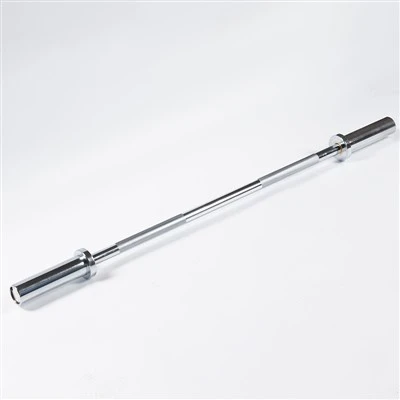
200K+ PSI High-Tensile Steel Power Bar: B2B Procurement & OEM Engineering Guide
The 200K+ PSI High-Tensile Steel Power Bar is engineered for high-performance strength training, commercial fitness facilities, and OEM/private-label programs. Built for applications where material strength, shaft stiffness, knurling consistency, and sleeve durability are critical, this guide provides professional procurement teams with the technical parameters needed for comprehensive evaluation.
Technical Specification & Buyer Evaluation Matrix
A professional power bar must be evaluated as a complete mechanical assembly rather than by tensile strength alone. Use the following matrix to define your procurement parameters:
|
Specification Item |
Procurement Consideration & Technical Options |
|
Steel Tensile Strength |
200,000+ PSI (Verified via Material Test Certificate) |
|
Steel Grade |
Alloy steel (e.g., 4340 or equivalent) - Confirm exact grade before production |
|
Yield Strength |
Defined by engineering requirements to prevent permanent deformation |
|
Shaft Diameter |
Standard powerlifting range: 28 mm to 29 mm |
|
Overall Bar Length |
Defined by approved technical drawing (typically ~2,200 mm) |
|
Bar Weight |
Standard 20 kg (Tolerance restricted per specification) |
|
Knurling Configuration |
Powerlifting-oriented pattern, depth, and width |
|
Center Knurling |
Optional / Customizable for secure back placement during squats |
|
Knurl Marks |
IPF or IWF standard spacing (configurable for target markets) |
|
Shaft Stiffness |
Controlled flex optimized for powerlifting (Squat, Bench, Deadlift) |
|
Sleeve System |
Self-lubricating bushings or precision needle bearings |
|
Loadable Sleeve Length |
Defined by technical drawing (standardized for standard plates) |
|
Surface Finish |
Hard chrome, black zinc, black oxide, Cerakote, or nickel-phosphorus |
|
Branding & Customization |
Laser-engraved logos, custom end-caps, and private-label packaging |
Demystifying "200K+ PSI" in Power Bar Manufacturing
A common misconception in fitness equipment sourcing is that a higher PSI rating automatically equates to a higher safe working load or a "better" bar.
Tensile Strength vs. Working Load: 200K+ PSI is a material property defining the maximum stress the steel can withstand before breaking. It does not represent the maximum safe working load of the finished bar.
The Complete Engineering Picture: Finished bar performance is a combined result of exact steel grade and chemical composition, heat treatment processes, shaft geometry and diameter, as well as sleeve-to-shaft fit and internal rotation mechanics.
Core Engineering & Design Parameters
Shaft Stiffness & Performance
Power bars require a stiffer shaft with controlled movement to minimize whip during heavy squats, bench presses, and deadlifts. Shaft behavior is governed by the interaction between material selection, diameter, and heat treatment.
Precision Knurling
Descriptions like "aggressive" or "premium" are subjective and inadequate for manufacturing. B2B orders require measurable parameters such as knurl pattern, depth measured in lines per inch (LPI), center knurl placement, and smooth machined transition zones.
Sleeve Assembly & Rotation
The sleeve system dictates long-term durability and spin characteristics under heavy axial loads. Options include low-maintenance bushing systems for institutional environments or precision needle bearing systems for specialized lifting applications, secured via reliable end-cap retention mechanisms.
Quality Control, Inspection, and Manufacturing Evidence
To mitigate sourcing risks, professional buyers should demand transparent quality control records:
Material Verification: Mill Test Certificates (MTC) verifying steel grade and chemical composition.
Mechanical Testing: Tensile, yield, and hardness test reports.
Dimensional Control: Micrometer checks on shaft diameter, sleeve length, overall length, and total weight.
Straightness Inspection: Laser or dial-indicator checks post-heat treatment to ensure runout is within strict tolerances.
Coating Inspection: Adhesion, corrosion resistance, and visual uniformity checks.
FAQ
Q: What does 200K+ PSI actually mean for a power bar?
A: It refers to the tensile strength specification of the raw steel material. It describes the point of stress where the material breaks, and it should not be confused with the maximum safe working load of the finished barbell assembly.
Q: Does a higher PSI rating mean the bar will never bend?
A: No. While higher tensile and yield strength improve resistance to permanent deformation, any steel bar can bend if overloaded improperly, dropped incorrectly on pins, or subjected to extreme leverage forces outside normal lifting parameters.
Q: Can we customize the knurling and knurl marks for our brand?
A: Yes. For OEM and private-label orders, knurl depth, pattern, center knurl inclusion, and dual/single knurl mark positioning can be completely customized to meet specific regional or federation standards.
Q: What is the difference between bushing and bearing sleeves for wholesale buyers?
A: Bushings use a sliding contact mechanism that offers high durability and minimal maintenance, making them ideal for commercial gyms. Bearings use internal needle rollers for smoother, faster spin, which is often preferred by specialized strength facilities.
Q: What documentation is provided before bulk shipment?
A: Suppliers provide Material Test Certificates (MTC), dimensional inspection reports, hardness test results, and pre-shipment quality inspection records to ensure consistency with the approved sample or technical drawing.
Hot Tags: 200k+ psi high tensile steel power bar, China 200k+ psi high tensile steel power bar manufacturers, suppliers, factory, 45 lb straight bar, barbell sets, gym lifting bar, short straight bar weight, Weightlifting Barbell Bearing, women s barbell bar